Razumevanje troškova
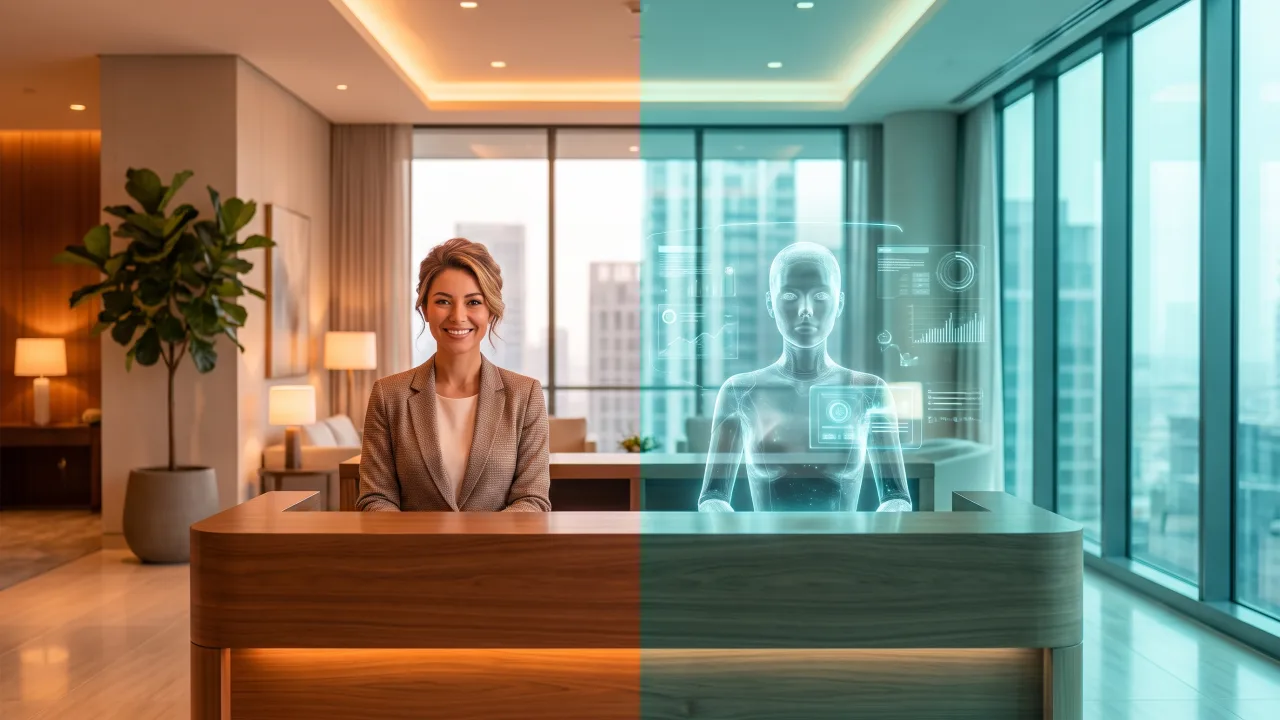
Za B2B uslužne kompanije poput stomatologa, salona, hotela i klinika, efikasno upravljanje recepcijom je ključno. Tradicionalni recepcioneri obično zarađuju između $30,000 i $50,000 godišnje, u zavisnosti od lokacije i iskustva. S druge strane, softver za AI recepcionere može koštati između $100 i $600 mesečno, u zavisnosti od funkcija i mogućnosti.
Da stavimo ovo u perspektivu, ako stomatološka klinika zapošljava recepcionera za $40,000 godišnje, mesečni trošak je otprilike $3,333. Ova cifra ne uključuje dodatne troškove kao što su beneficije, porezi ili troškovi obuke, koji mogu udvostručiti stvarne troškove. Nasuprot tome, AI recepcioner koji košta $300 mesečno prevodi se na samo $3,600 godišnje, što je značajno manje od tradicionalne opcije.
Povećanje efikasnosti i produktivnosti
Jedna od glavnih prednosti korišćenja AI recepcionera je potencijal za povećanje efikasnosti. AI sistemi mogu obavljati više zadataka istovremeno, kao što su zakazivanje, odgovaranje na često postavljana pitanja i obrada uplata. Istraživanje je pokazalo da AI recepcioneri mogu upravljati do 100 poziva istovremeno, dok tradicionalni recepcioner obično može obraditi samo jedan poziv u isto vreme.
Ova efikasnost može dovesti do višeg zadovoljstva kupaca i stopa zadržavanja. Na primer, ako hotel doživi 20% povećanje rezervacija zbog bržih vremena odgovora, a svaka rezervacija u proseku iznosi $150, to se prevodi na dodatnih $18,000 prihoda tokom godine od samo 10 dodatnih rezervacija mesečno.
Skalabilnost i fleksibilnost
AI recepcioneri nude izvanrednu skalabilnost koju tradicionalni recepcioneri ne mogu pružiti. Kako se posao širi, potražnja za uslugama recepcije takođe raste. Zapošljavanje dodatnog osoblja kako bi se zadovoljila ova potražnja može biti skupo i vremenski zahtevno. Nasuprot tome, AI sistemi se mogu unaprediti ili proširiti bez značajnih ulaganja.
Na primer, ako salon planira da udvostruči svoju bazu kupaca, može jednostavno unaprediti svoju uslugu AI recepcionera umesto da zapošljava i obučava novo osoblje. Ova fleksibilnost omogućava preduzećima da se brzo prilagode promenljivim potrebama bez visokih troškova.
Potencijalna ograničenja AI recepcionera
Iako AI recepcioneri nude brojne prednosti, oni takođe dolaze sa ograničenjima. Mogu se suočiti sa složenim upitima kupaca koji zahtevaju ljudsku empatiju ili prosudbu. Na primer, pacijent na stomatološkoj klinici može zahtevati utehu tokom stresnog zakazivanja, što je nešto u čemu tradicionalni recepcioner odlično uspeva.
Međutim, mnogi AI sistemi sada uključuju napredne mogućnosti obrade prirodnog jezika, što im omogućava da efikasno obrade značajan spektar upita. Preduzeća moraju proceniti svoje specifične potrebe i odrediti pravi balans između AI i ljudske interakcije.
Zaključak: Donošenje pravog izbora
U zaključku, poređenje troškova između AI i tradicionalnih recepcionera je jasno. Dok tradicionalni recepcioneri imaju veće troškove i možda se ne skaliraju tako efikasno, AI recepcioneri nude niže operativne troškove, povećanu efikasnost i skalabilnost. Preduzeća moraju razmotriti ove faktore u odnosu na svoje specifične potrebe i strategije interakcije sa kupcima.
Za B2B uslužne kompanije koje žele da poboljšaju efikasnost dok smanjuju troškove, AI recepcioneri predstavljaju privlačnu opciju. Počnite danas i vidite kako AI recepcioner može transformisati vaše poslovne operacije.
Želite li da vidite ovo u akciji?
Dodajte AI recepcionera u svoje preduzeće za 5 minuta. Prvih 500 sajtova dobija 3 meseca besplatno.